Escrow · Disputes · Local fiat · Full source
A P2P crypto exchange you self-host and own
Vonex ships a real P2P crypto exchange — escrow with payment timers, private in-trade chat, trader reputation, and an admin dispute desk. Onboard local fiat where card rails will not reach, under your own brand, on a one-time license with no revenue share.
Definition
What is a P2P crypto exchange?
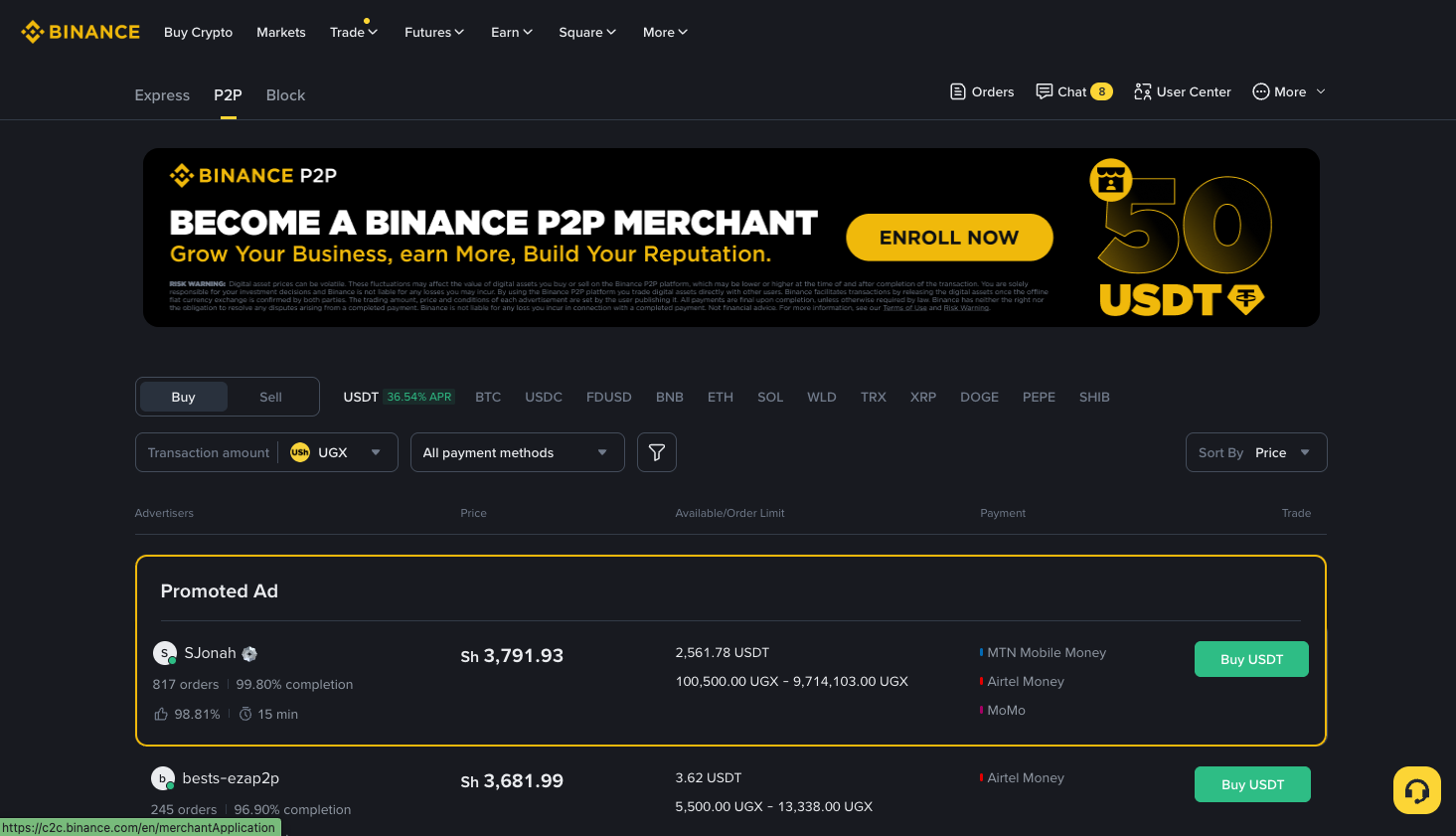
A P2P crypto exchange matches buyers and sellers directly. Instead of trading against an order book, a user answers another user's ad, and the platform holds the crypto in escrow while the two settle the fiat side through a payment method they agree on. When payment is confirmed, escrow releases the crypto.
That model is how operators reach markets order-book venues cannot: regions where card processors decline crypto, or where bank transfer and mobile money are how people actually move money. It is the pattern Paxful and LocalBitcoins made popular — and the gap they left behind is a real opening for a new venue.
The trade lifecycle
How P2P escrow works, step by step
Most competitor pages hand-wave this. Here is the actual flow a trade follows on Vonex.
-
01
A seller posts an ad
Sellers publish buy or sell ads with their price, limits, and which payment methods they accept. Ads are scoped to the currencies and markets you enable.
-
02
A buyer opens a trade — crypto locks in escrow
When a buyer takes the ad, the seller's crypto is locked in escrow immediately. The seller cannot withdraw escrowed funds mid-trade; the platform enforces the hold.
-
03
The buyer pays within a payment window
The buyer sends fiat off-platform using the agreed method (bank transfer, mobile money, etc.) before the payment timer expires, then marks the trade as paid.
-
04
Buyer and seller talk in private chat
A real-time chat runs for the life of the trade over self-hosted WebSockets, so both sides can share references and confirm details without leaving the platform.
-
05
The seller confirms and escrow releases
Once the seller confirms the fiat arrived, escrow releases the crypto to the buyer and the trade completes. Release and payment timings are tracked for every escrow.
-
06
Disputes go to the admin desk
If something goes wrong, either side opens a dispute. An admin reviews the chat and evidence and resolves it for the buyer (release) or the seller (return) — a final decision, with moderation messages posted into the trade.
-
07
Both sides leave a review
After completion, each trader can leave a 1–5 rating and comment. Reputation accumulates publicly, which is what keeps a P2P marketplace safe at scale.
What ships
Inside the Vonex P2P module
Every part of the marketplace ships as source you can inspect, rebrand, and extend.
Buy & sell ads
A marketplace of trader ads with price, limits, and accepted payment methods, scoped to the currencies and markets you enable.
Atomic escrow
Crypto locks the moment a trade opens and releases only on confirmation. Sellers cannot pull escrowed funds mid-trade — the platform holds them.
In-trade chat
A private, real-time chat per trade over self-hosted WebSockets, with admin moderation messages when a trade is under review.
Payment windows
Each trade runs on payment and release timers, so stalled trades are visible and disputes have a clear timeline.
Reviews & reputation
1–5 ratings and comments after every completed trade build the public trader reputation that makes a P2P venue trustworthy.
Admin dispute desk
Resolve a disputed trade for the buyer or the seller after reviewing chat and evidence — a final, auditable decision from the admin.
P2P payment methods are configured as gateways — bank transfer, mobile money, and more — each scoped per currency. Run it under your own brand as a white label crypto exchange, or see the full feature map.
Which model to launch
P2P vs order-book: which should you run?
They are not mutually exclusive — Vonex ships both — but they solve different problems.
| Dimension | P2P marketplace | Order-book spot |
|---|---|---|
| Fiat on-ramp | Local methods users already use | Depends on a payment processor |
| Liquidity source | Your users fund each other | Market makers or your inventory |
| Best for | Emerging markets, local rails | Active traders, tight spreads |
| Trust model | Escrow + reputation + disputes | The matching engine itself |
| On Vonex | Feature-flagged module | Ships in every tier |
Many venues launch P2P first to bootstrap local liquidity, then switch on order-book spot as volume grows. Because both are the same codebase, that is a configuration change, not a second build. See the how to start a crypto exchange guide for the full launch path.
Build vs buy
P2P crypto exchange development, without rebuilding escrow
Escrow state machines, dispute tooling, real-time chat, and reputation are the expensive, error-prone parts. Source that already has them turns development into customization.
| Approach | Cost & time | You own the code? |
|---|---|---|
| P2P crypto exchange development company | Agency rates, months of build | Yes, once finished |
| Managed / SaaS P2P platform | Monthly fee or revenue share | No |
| License the Vonex source | $499–$1,999 one-time, deploy in days | Yes — full source, day one |
You do not need a P2P crypto exchange software development company to own a marketplace. Because Vonex ships full Laravel source, P2P crypto exchange development is normal web work — theming, new payment methods, and market configuration — on top of an escrow engine that already works. Compare the economics on the crypto exchange software and cost pages.
Pricing
One-time license, full source
Own the P2P marketplace outright — no revenue share, no per-trade cut. The P2P module ships in the All-in tier and above.
Starter
$899
$499
USD
- Market, Limit, Stop, Stop-Limit & Trailing orders
- GTC / IOC / FOK time-in-force
- Live WebSocket order book
- Multi-currency wallets
- 2FA, passkeys & Google login
- Full admin back-office
- Instant Swap (Like Uniswap)
- P2P marketplace with escrow & chat
- White-label rebrand rights
- 1 domain · 6 months updates
Pay once. Build your project!
All-in
$1049
$549
USD
- Market, Limit, Stop, Stop-Limit & Trailing orders
- GTC / IOC / FOK time-in-force
- Live WebSocket order book
- Multi-currency wallets
- 2FA, passkeys & Google login
- Full admin back-office
- Instant Swap (Like Uniswap)
- P2P marketplace with escrow, chat & reviews
- White-label rebrand rights
- unlimited domains · 12 months updates
- High-priority developer support
Pay once. Build unlimited projects!
Vonex + Guerilla Seo Tactics
$1648
$599
USD








Pay once. Build unlimited projects!
See the full breakdown on the pricing page.
Trust & ownership
Built to own — not rent
Visible commitments serious buyers care about: self-hosting, source access, and honest packaging.
Self-hosted
Deploy on infrastructure you control — no app hosting lock-in.
Full source code
Unencrypted source for licensees. Read it, change it, ship it.
You own the stack
Brand the venue under your name. Keep data and code with you.
One-time license
No revenue share on trades in product packaging. Predictable cost.
Real matching engine
Price-time priority, holds, and advanced order types — not a mock book.
30-day money-back
No-questions-asked guarantee on the sales positioning for the license.
FAQ
P2P crypto exchange FAQ
What is a P2P crypto exchange?
A P2P (peer-to-peer) crypto exchange lets users trade directly with each other instead of against an order book, with the platform holding the crypto in escrow while the buyer pays the seller through an agreed fiat method. It is the model behind venues like the old Paxful and LocalBitcoins, and it is how operators onboard local fiat where card processors will not operate.
How does P2P escrow work on Vonex?
A seller posts a buy/sell ad; when a buyer opens a trade, the crypto is locked in escrow. The buyer pays the seller off-platform within a payment window, the seller confirms receipt, and the escrow releases the crypto to the buyer. Buyer and seller talk in a private real-time chat during the trade. Sellers cannot withdraw escrowed funds mid-trade — the lock is enforced by the platform.
How are P2P disputes resolved?
If a trade is marked disputed, an admin reviews the chat and evidence and resolves it either for the buyer (releasing the crypto) or for the seller (returning it). The resolution is final once applied. Admins can also post moderation messages into the trade chat while investigating.
Which payment methods can a P2P crypto exchange support?
P2P payment methods are fiat rails you define as gateways — bank transfer, mobile money, and other local methods — each scoped to the currencies you enable. You choose which methods to offer per market, so you can tailor the venue to a specific region.
Do I need a P2P crypto exchange development company?
Usually not. A P2P crypto exchange development company bills agency rates to build the escrow engine, dispute tooling, chat, and reputation system from scratch. Vonex ships all of that as source: because you get the full code, one full-stack developer can rebrand it and add local payment methods — the work a P2P crypto exchange software development company would otherwise charge for.
Is the P2P marketplace standalone or part of the exchange?
It is a module of the same platform, feature-flagged so you can run it alongside spot trading and instant swap or on its own. The P2P marketplace ships in the All-in tier and above; the spot core ships in every tier.
Do users build a reputation on the P2P exchange?
Yes. After a completed trade, each side can leave a 1–5 rating and a comment, so traders accumulate a public reputation. Reputation is what makes a P2P marketplace safe to use at scale, alongside escrow and disputes.
Can I self-host the P2P crypto exchange software?
Yes — it is a Laravel (PHP 8.5) application you run on your own server, with real-time chat and updates over self-hosted WebSockets. You keep the code, the data, and the region, on a one-time license with no revenue share.
Launch a P2P crypto exchange you own
Trade the live demo to see escrow, chat, and disputes working, then license the full source for your venue.